Built Buildings Outcomes at COP30
“We are barreling toward 2.8°. This is not the world we want; it is not the world we promised each other.”
“[Climate action] is not just about surviving, it is about sustaining the human spirit.”
COP30 opened with aspirational intentions to be the “COP of Implementation.” While reality fell short of these goals in many ways, this year’s conference marked significant advancement for built buildings as equitable climate solutions.
While every stakeholder and solution has a role to play at COP, the superpower of built buildings is their relevance across many sectors, policy pathways, and conversations. Existing buildings offer high-impact technical solutions for decarbonization. They are critical components of human resilience. They are massive contributors to waste. They use, store, and generate clean energy. And, perhaps most importantly, they embody culture, heritage, and community identity.
There’s no single outcome that defines progress at COP, but rather a series of advances in UN frameworks, state policies and commitments, and the substance of the bigger conversations. Here's a snapshot of how we observed built buildings showing up at COP30.
The Action Agenda
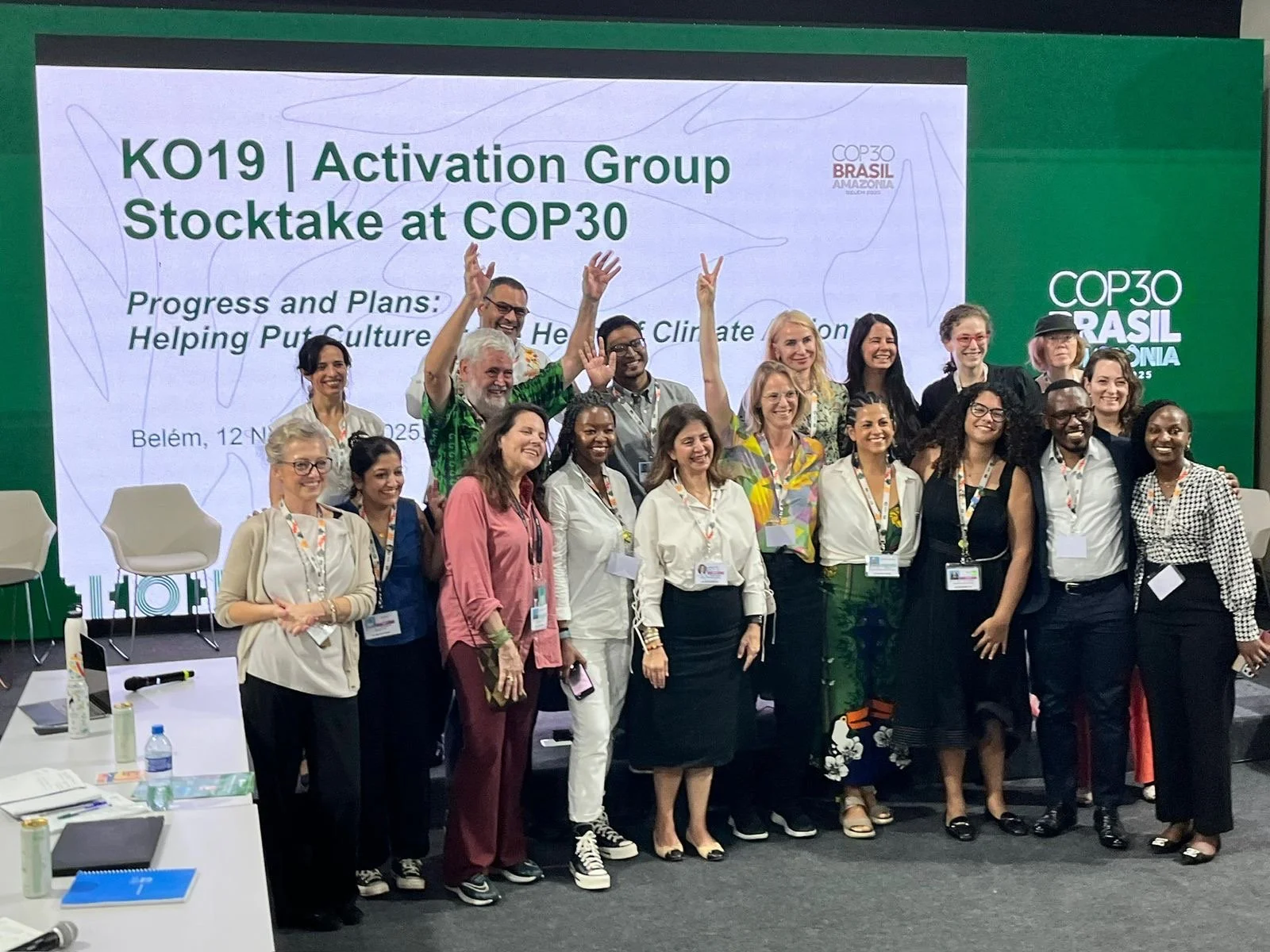
The COP30 Action Agenda was introduced as an ambitious new framework to coordinate and accelerate a “whole of society” response to the climate crisis. In a major win, existing buildings solutions were represented in two of the thirty Activation Groups of the agenda: AG12, Sustainable and Resilient Buildings and Construction and AG19, Culture, Cultural Heritage Protection, and Climate Action. Our initiative Decarbonizing the Built Environment through Heritage (DBTH) was selected by the COP30 Presidency and the Climate High-Level Champions to participate in the Action Agenda through Activation Group 19.
In AG19, Built Buildings Lab represented built heritage in a group focused on culture writ large, including the Climate Heritage Network, Preserving Legacies, ICOMOS, the World Monuments Fund, and the International Council on Museums. Our Plan to Accelerate Heritage-Informed Decarbonization in Built Environment Policy was selected as one of roughly 100 "Plans to Accelerate Solutions" (PAS) developed through the Action Agenda.
On the flip side, we represented built heritage solutions in the Plan to Accelerate Net Zero, Efficient, Resilient Buildings through Activation Group 12, resulting in the inclusion of built heritage as demand drivers and capacity-building tools.
Learn more about DBTH, the Action Agenda, and how this extends the project’s impacts in our last article.
Policy Outcomes and Commitments
The primary purpose of the UN COP convenings is the advancement of multilateral policies and commitments. While these high-level policies may seem distant from the daily work of caring for built buildings, they open the door for important financing and policy down to the local scale.
Sharm el-Sheikh mitigation ambition and implementation work program (MWP) is a primary pathway for decarbonization negotiations. This year, one of the MWP areas of focus was the waste sector, including circular economy approaches. Despite the fact that construction and demolition waste represents up to 40% of global solid waste and the proven, scalable solutions of reuse at the building and material scales, buildings were not mentioned in the final MWP decision. Learn more about heritage and existing building solutions for waste in the formal submission to the MWP made by Built Buildings Lab on behalf of the Climate Heritage Network.
The Global Goal on Adaptation (GGA) was adopted to strengthen resilience and reduce vulnerability following a two-year work program. The major output of the GGA are indicators to inform local frameworks and track global progress. Existing and heritage buildings show up under both target 9(e), increasing the resilience of infrastructure and human settlements and target 9(g), protecting cultural heritage. Learn more about the important inclusion of culture in the GGA from our collaborators at Preserving Legacies.
The first Ministerial Meeting of the Intergovernmental Council on Buildings and Climate (ICBC) was held, which included the announcement of the Belém Call for Action for Sustainable and Affordable Housing and the commitment of participating countries to advance low-carbon, resilient design. While retrofit, circularity, and whole life carbon limits are advancing, traditional knowledge, local practices, and heritage were absent.
Around the COP
Outside the closed doors of negotiations and coordination meetings, the discourse at COP is led by industry, NGOs, local governments, educational institutions, and others. The presence of built buildings solutions across many venues was a real testament to the momentum building on the ground. Here are just a few examples from our week on the ground:
Unlocking the Power of Cultural Heritage in Climate Action, co-hosted by Davos Baukultur Alliance with the World Economic Forum, brought together leaders from industry, government, and civil society to explore the economic, social, and ecological co-benefits that come from leveraging traditional wisdom and cultural heritage.
Principles for Responsible Timber Construction, developed by Built by Nature, Bauhaus Earth, and FCLP and endorsed by 8 countries, list as the first principle “Extending the life of existing buildings: The potential for existing structures to be repurposed, renovated, and/or extended using timber, biobased, secondary and other low-carbon materials is prioritised over demolition.”
The UN Environment Programme calls for a tripling of renovation rates by the year 2030, in addition to accelerating electrification and harmonizing embodied carbon frameworks, all of which are essential strategies to care of the existing built environment.
Through our official UNFCCC Side Event What Can We Learn from Climate Smart Traditional Buildings, hosted by Architecture 2030, ICOMOS, and SHIFT and our event Sufficiency + Heritage: Learn from the Past and Build Lightly in the Present at the Buildings and Cooling Pavilion, we were able to robustly launch the Heritage Now! campaign calling for heritage-informed decarbonization. The campaign gained the endorsement of over twenty organizations representing over 1 million members in its first week, demonstrating the widespread support for heritage-informed climate solutions in the built environment.
“This is the beginning of implementation. We all have a role to play based on our circumstances and abilities. Every action matters.”
One lasting takeaway from COP30 is the importance of Global Mutirão, or collective action. It is the sum total of our efforts that will make the difference in climate action.
Built Buildings Lab is moving forward to capitalize on the opportunities created at COP30 through the Action Agenda and beyond. Join us in the Heritage Now! campaign to become part of the movement, reach out if you’d like to learn more.
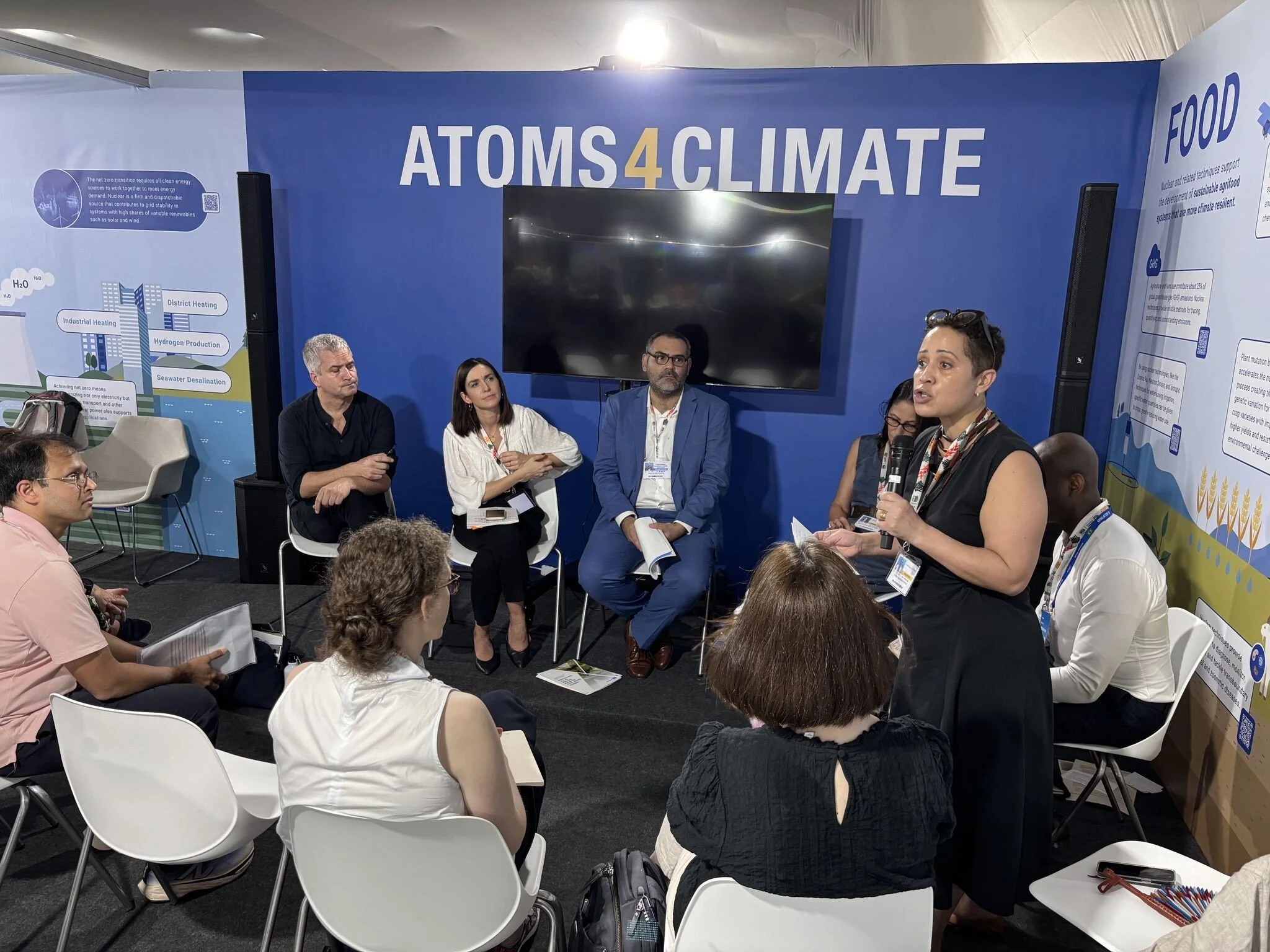
Image credits left to right: Action Agenda coordinators; Global Alliance for Buildings and Construction; Heritage Adapts!; World Economic Forum