Decarbonizing the Built Environment Through Heritage (DBTH) Toolkit
The Decarbonizing the Built Environment through Heritage Toolkit aims to support policymakers, practitioners, communities, and heritage advocates in accelerating the rapid uptake of heritage-informed decarbonization strategies through policy.
It includes:
An overview of the key policies, stakeholders, and approaches that contribute to heritage-informed decarbonization
Key principles founded in heritage to drive built environment decarbonization, with context about why they matter in today’s landscape and how to adapt them to a local community context
Global examples of heritage-informed decarbonization in action, from buildings and design practices to tools and policies
High-impact levers to integrate heritage principles into building sector climate policies and include climate change mitigation into heritage policies.
View or download the toolkit
01 Introduction
Heritage-informed decarbonization sits at the intersection of climate action, the built environment, and cultural heritage. This section introduces the concept and provides the frameworks, language, and context needed to understand how these fields connect—and why that intersection matters.
02 Principles + Policies
This section presents the toolkit’s core policy messages through five recommendations for advancing heritage-informed decarbonization in the built environment. Drawn from projects, programs, and policies from around the world, they identify policy levers that can help scale heritage-based climate action and adapt those ideas to local context.
03 Case Studies
This section presents the toolkit’s core policy messages through five recommendations for advancing heritage-informed decarbonization in the built environment. Drawn from projects, programs, and policies from around the world, they identify policy levers that can help scale heritage-based climate action and adapt those ideas to local context.
follow DBTH
-
In April of 2024, Lori Ferriss represented DBTH and Climate Heritage Network at the Annual Assembly of the UNEP Global Alliance for Buildings and Construction. Her role was to represent the importance of cultural heritage in building sector climate action and identify key levers for impact for DBTH across workstreams including circular economy, sufficiency, and market transformation.
-
One of the 2025 Sharm El Sheikh Mitigation Ambition and Implementation Work Programme topics is “enabling mitigation solutions in the waste sector, including through circular economy approaches.” This topic will be explored at the MWP’s Sixth Global Dialogue, whose outputs are expected to inform COP30’s mitigation decision. At SB62, working with the LGMA constituency group led by ICLEI, CHN representatives were able to intervene on the culture and heritage dimensions of circular economy during a planning session for the Sixth Dialogue organized by the MWP Co-Chairs. Learn more about CHN’s actions at SB62 here.
-
The Sharm El Sheikh Mitigation Ambition and Implementation Work Programme (MWP) has proved a key UNFCCC battleground on fossil-fuel phaseout and other contentious GHG issues.
The MWP’s Sixth Global Dialogue, whose outputs are expected to inform COP30’s mitigation decision, will focus on “enabling mitigation solutions in the waste sector, including through circular economy approaches.” Following our intervention at SB62 on this subject, DBTH made an official submission on the role of heritage in a circular economy. -
DBTH will represent the important role of heritage-informed decarbonization in Addis Ababa, including at the MWP 6th Global Dialogue on waste and circularity. Stay tuned for more details.
-
DBTH participated in a meeting of the UNFCCC COP30 Activation Group 19 on Culture, Cultural Heritage Protection, and Climate Action and the SHIFT convening, co-hosted by the German Sustainable Building Council and Architecture 2030, advocating for heritage-transformed approaches to built environment policy in the global north. Read more here.
-
DBTH officially launched the Heritage Now! campaign at COP30 through a series of presentations, a formal UNFCCC side event, and through the Global Climate Action Agenda. Check out our Learnings and Stories to learn more:
https://www.builtbuildings.org/learnings-and-stories/built-buildings-outcomes-at-cop30
-
DBTH will be featured at two events at the UN Environment Programme Global ABC’s Sustainable Buildings and Construction Summit. Workshop Culture, Heritage, and Social Sustainability: Foundations for a Sustainable and Resilient Future, co-led by Climate Heritage Network and Architecture 2030, will bring together stakeholders across the buildings and construction value chain to share successful examples of cultural and social sustainability across regions and scales, identify common barriers for scaling this work, and brainstorm how to share knowledge and apply best practices across global contexts.
Advancing Culture and Heritage in the UNFCCC Global Climate Action Agenda, convened by the Cornell Atkinson Center for Sustainability and the Climate Heritage Network will bring together a growing coalition of organizations, practitioners, and members of the public to build momentum around cultural heritage as a core strategy for built environment decarbonization.
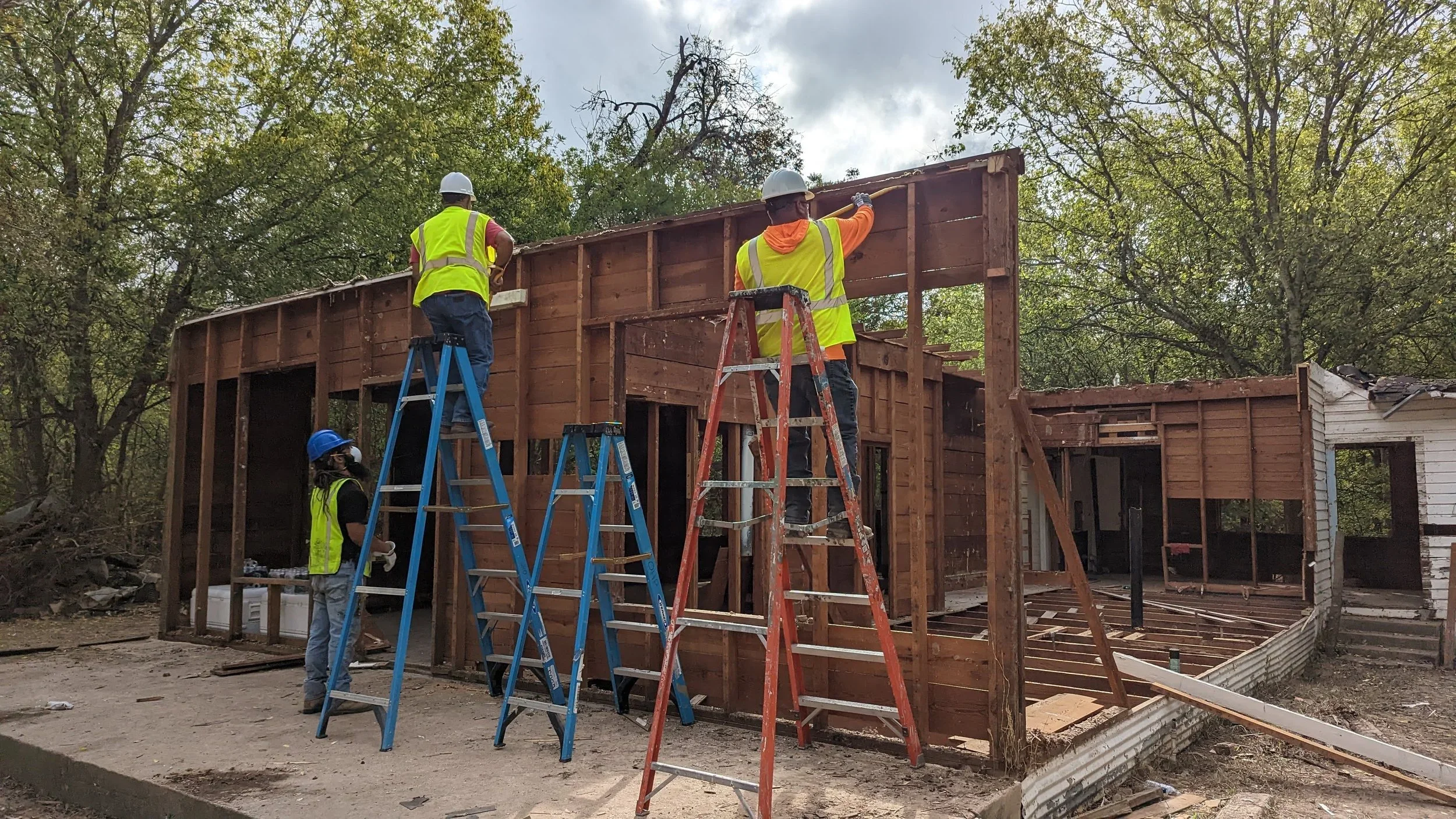
Photo courtesy of San Antonio Office of Historic Preservation.
meet the team
-

Lori Ferriss, Built Buildings Lab
PROJECT LEAD
-

Billie Faircloth, Built Buildings Lab
RESEARCH LEAD
-

Mokọ́ládé B Johnson, University of Lagos
AFRICA REGION LEAD
-
Lisa Richmond, Architecture 2030
ENGAGEMENT LEAD