European Heritage Homes in Climate Policies and Action
Do as much as necessary and as little as possible.
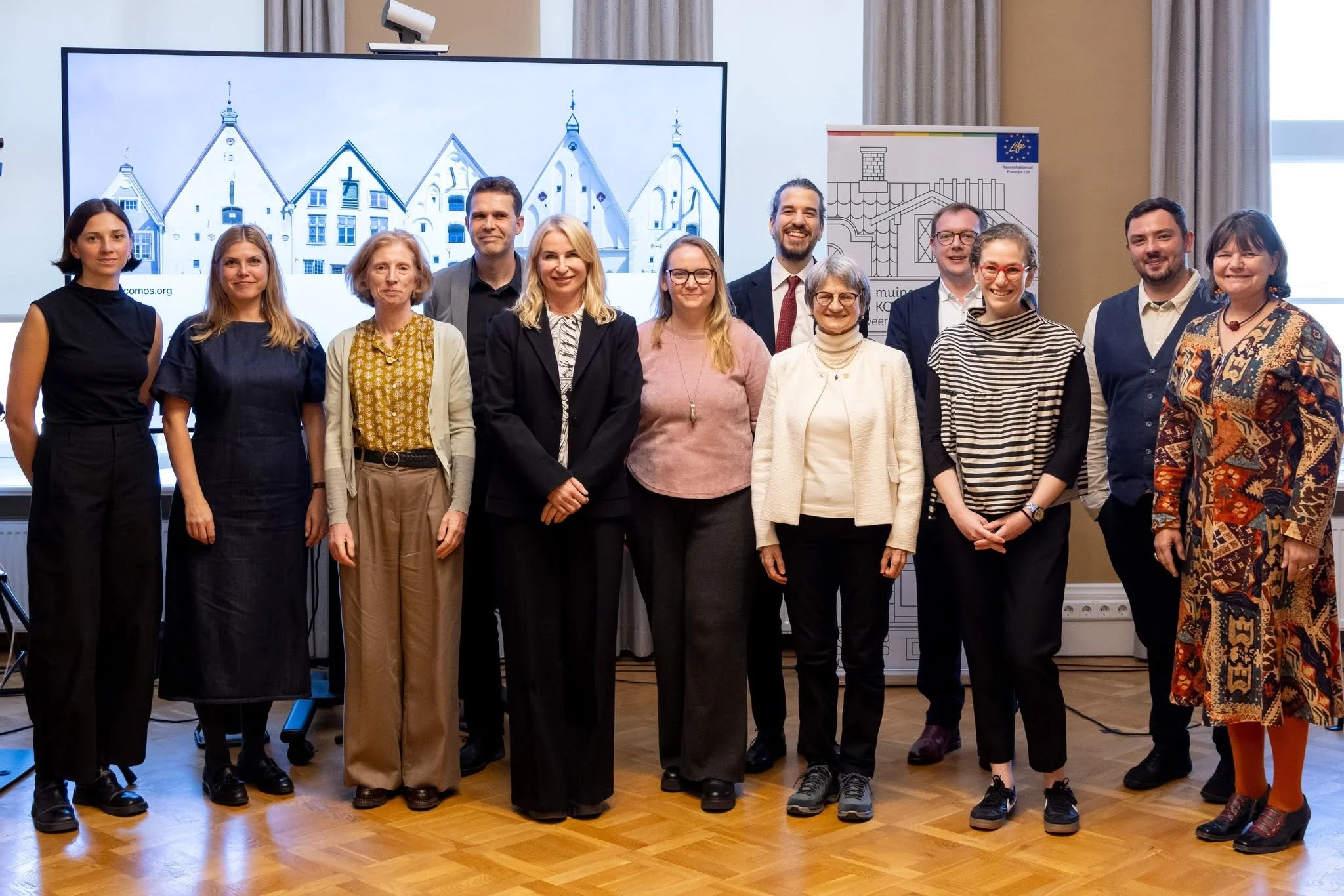
This was a recurring theme at the European Heritage Homes in Climate Policies and Action conference. Held in Tallinn and online, the conference brought together policymakers, researchers, heritage practitioners, and project leaders to examine the role of historic buildings in climate policy and energy renovation across Europe, and to move the conversation from policy to practice. It was hosted by ICOMOS Estonia in cooperation with the ICOMOS Climate Action Working Group, ICOMOS ISCES, the ICOMOS Europe Group, the Estonian Ministry of Culture, the Estonian Ministry of Climate, the National Heritage Board, Tallinn University of Technology, the Estonian Academy of Arts, and the Chancellor of Justice.
A few big takeaways emerged throughout the day:
Continuous stewardship and maintenance are the underpinnings of good energy performance, but they are almost never credited or incentivized as low-cost, low-impact measures for occupants. Maintenance can reduce energy bills and improve quality of life for occupants. It also reduces whole life carbon by avoiding the need for new materials over time and reducing operational emissions from energy use.
The scale of the challenge is massive: millions of existing buildings need to decarbonize in just a few short decades. The big, expensive renovations are few and far between. To reach every building, we have to make every action count through daily care and incremental upgrades.
All historic buildings are unique. And yet… projects including FuturHist, BEACON, and Ireland’s Office of Public Works initiative, Improving the Energy Performance of Heritage Properties in State Care, are creating roadmaps, guidelines, educational resources, and tools that provide replicable methods without defaulting to standardized solutions.
Think more. Build less. Instead of moving quickly through design by applying a standardized, often intensive and invasive interventions to make historic buildings climate fit, start by deeply understanding the building and the people who use it. Spending more time rigorously assessing existing conditions using the best available knowledge and technology—old or new—can lead to the less construction work in the end.
Our shared cultural heritage is stewarded by individual building owners. The LIFE heritageHOME project offers knowledge, guidance, and practical tools to adapt and protect that heritage through unprecedented climate change.
Together, these efforts show growing momentum and a rapidly expanding body of knowledge for heritage-informed climate action. They also demonstrate the urgency of bringing these solutions into mainstream climate policy and practice. With millions of existing buildings to decarbonize in the coming decades, heritage approaches are not a niche consideration; they are essential to acting at the scale and pace the climate crisis demands.